
Choosing a reliable clothing factory in China is one of the most important decisions a fashion brand can make. The lowest quotation is not always the best value: sampling quality, product expertise, communication, quality control and delivery reliability all affect your final cost and launch date.
This practical guide gives startup labels, established brands, sports teams and sourcing teams 12 questions to ask before selecting a manufacturing partner. Use them to compare suppliers clearly, reduce avoidable revisions and build a smoother path from your design idea to bulk production.
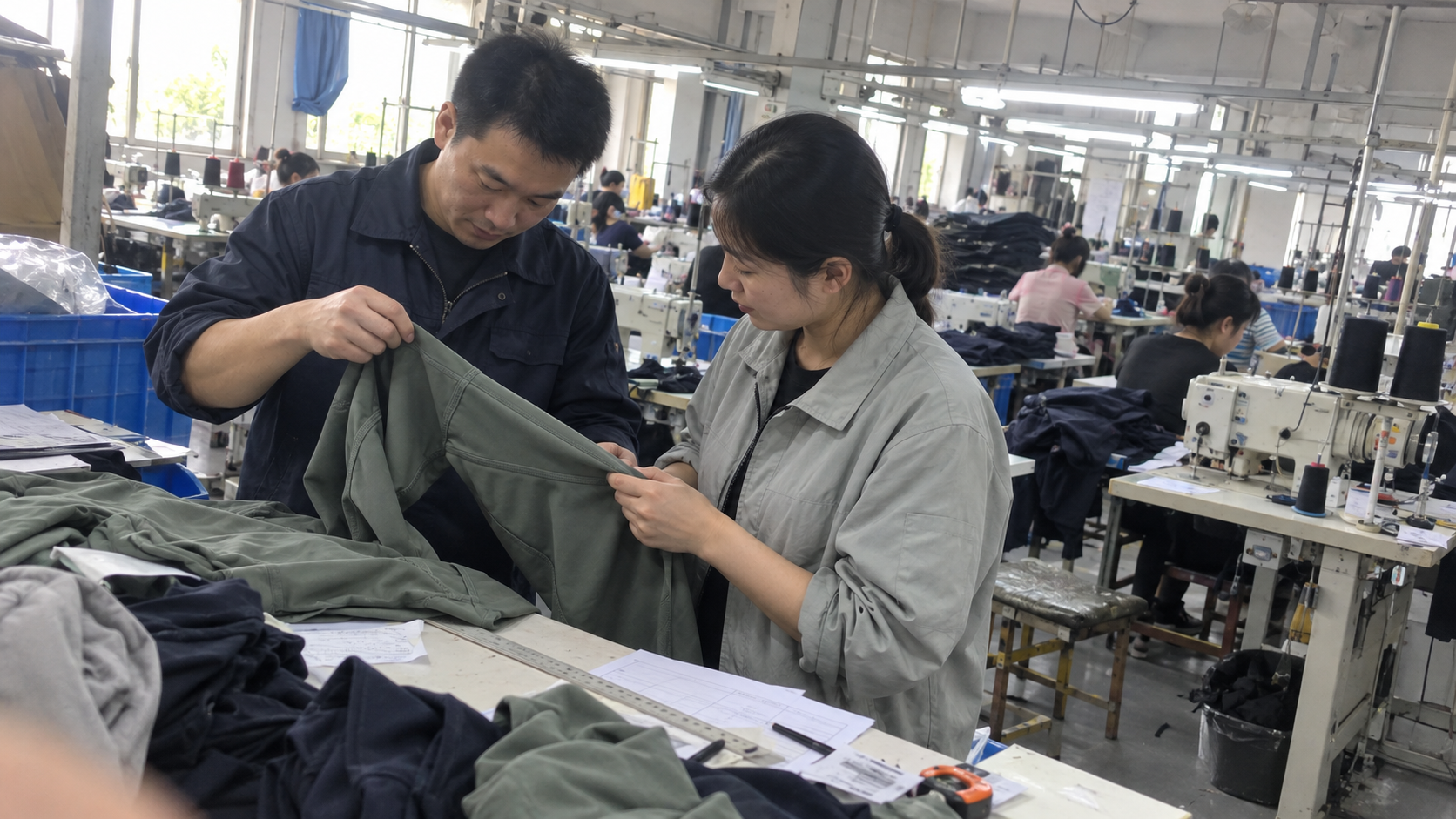
Why Choosing the Right Clothing Factory in China Matters
A capable manufacturing partner does more than sew garments. It helps translate design ideas into production-ready specifications, identifies material or construction risks, prepares samples, manages approvals and maintains consistency across a bulk order.
A poor supplier fit can lead to repeated samples, unclear pricing, fabric substitutions, inconsistent sizing and missed launch dates. A good fit gives your team transparent information and realistic choices before production begins. That is why supplier evaluation should start with your product—not with a generic price comparison.
12 Questions to Ask a Clothing Factory in China
1. What product categories do you manufacture most often?
Start by checking whether the factory regularly produces your type of garment. Activewear, teamwear, streetwear, uniforms, denim and casual fashion use different fabrics, machinery and construction methods. Ask for examples that are relevant to your design, target market and expected quality level.
Specialization matters. A supplier that understands stretch seams, performance fabrics and sublimation may be a better activewear partner than a general cut-and-sew workshop. Likewise, structured jackets or denim products require different technical experience.
2. Do you support OEM, ODM, or both?
With OEM manufacturing, the buyer normally provides a design, tech pack or detailed reference for the factory to produce. ODM support can include product development, fabric suggestions, pattern assistance or adapting an existing concept for your market.
Clarify exactly what development work is included. If you only have sketches or reference images, ask what information the factory needs to turn them into an accurate sample. You can also review our guide to the OEM/ODM clothing manufacturing process.
3. What information do you need for an accurate quotation?
A professional quote should be based on clear specifications. Prepare as much of the following information as possible:
- Tech pack, drawing or clear reference images
- Fabric composition, weight (GSM), color and performance requirements
- Size range and measurement chart
- Printing, embroidery, patches or other decoration
- Custom labels, hangtags and packaging
- Quantity per style, color and size
- Target delivery date and destination country
If important details are missing, treat the first number as an estimate rather than a final price. Ask what may change the cost before approving a sample or deposit.
4. What is your minimum order quantity?
MOQ can vary by garment, fabric, color and customization method. Instead of asking only for one factory-wide number, ask for the MOQ per style and per color. Stock fabric may support a different quantity from custom-dyed fabric, while special trims or packaging can have their own supplier minimums.
Also confirm whether sample costs, pattern fees or material surcharges are credited toward a bulk order. A transparent clothing factory in China should explain the commercial reason behind each minimum.
5. How does the sampling process work?
Ask how many sample stages may be needed and what is checked at each stage. A typical project can include a development sample, fit sample, revised sample, color or print approval and pre-production sample. The exact sequence depends on product complexity.
Before requesting a revision, collect all comments in one organized document. Mark measurement changes, construction details, artwork placement and material decisions clearly. This reduces misunderstandings and keeps sample versions under control.
6. How do you source and approve fabrics?
Fabric performance affects appearance, comfort, durability and fit. Ask the manufacturer how it verifies fiber composition, GSM, stretch and recovery, shrinkage, colorfastness and hand feel where relevant. Request swatches before committing to a material.
For performance clothing, discuss moisture management, opacity and pilling requirements. For washed garments or denim, confirm how wash treatments may affect color and measurements. All approved materials should be recorded so bulk production follows the same standard.
7. Which customization methods are available?
Confirm whether the supplier can manage the decoration methods your design needs, such as screen printing, direct-to-garment printing, heat transfer, sublimation, embroidery, woven patches or appliqué. Ask to see a sample of the proposed method on the actual or most similar fabric.
Brand identity also includes neck labels, care labels, size labels, hangtags, polybags and cartons. List every branded component in the quotation so that small packaging details do not become last-minute delays.
8. How do you control quality?
Quality control should happen throughout production, not only after garments are packed. Ask about incoming material inspection, cutting checks, in-line sewing inspection, measurement checks and final inspection. Agree on measurement tolerances, workmanship standards and how defects will be handled before bulk production starts.
For larger or higher-risk orders, you may also arrange an independent inspection. Whether inspection is internal or third-party, the acceptance criteria should be written and understood by both sides. The ISO quality management principles are also a useful reference when evaluating a supplier’s approach to consistent quality.
9. What are the realistic lead times?
Separate the timeline into development, sampling, material preparation, bulk production, quality inspection and shipping. “Production time” may not include fabric booking, custom-dyeing, label production or transit.
Tell the supplier your required in-hand date, not only the date you hope production will finish. A reliable China clothing manufacturer should flag risks early and give a realistic approval deadline for each stage.
10. How will communication and approvals be recorded?
Strong communication prevents expensive assumptions. Ask who will manage your project and which channel will be used for formal approvals. Keep tech packs, quotations, comments and sample photos organized by version.
After a call, summarize important decisions in writing. Confirm fabric codes, Pantone colors, artwork sizes, placements, measurements and packaging. One clear approval record protects both buyer and factory.
11. Which shipping terms and documents can you support?
Ask whether the quotation is based on EXW, FOB, CIF, DDP or another agreed term, and make sure you understand which costs and responsibilities are included. Discuss carton dimensions, packing lists, commercial invoices and any product-specific documents required by your destination market.
Shipping time and import requirements differ by country, so coordinate with a qualified freight forwarder or customs adviser when needed. The cheapest freight option may not match a fixed retail launch date.
12. Can you provide relevant factory evidence?
Request recent photos or a video of relevant production areas, examples of comparable products and a clear description of which processes are completed in-house or by approved partners. If certifications are important to your company, verify their validity and scope rather than relying only on a logo.
When possible, begin with a sample or controlled first order. This allows you to assess product quality, response time and problem-solving before scaling.
Red Flags When Comparing Clothing Factories in China
Be cautious when a supplier:
- Provides a final price before reviewing essential specifications
- Promises an unusually short timeline without explaining materials and approvals
- Will not produce a sample or document agreed changes
- Uses vague fabric descriptions without codes or composition details
- Cannot explain its quality-control process
- Pressures you into a large order before sample approval
- Changes important terms repeatedly or communicates inconsistently
One warning sign may be a misunderstanding, but several together should prompt deeper verification before payment.
A Simple Supplier Evaluation Scorecard
Comparing factories with the same criteria helps your team make a balanced decision. Score each supplier from 1 to 5, multiply by the suggested weight and keep notes supporting every score.
| Evaluation area | Suggested weight | What to review |
|---|---|---|
| Product-category fit | 20% | Relevant fabrics, machinery and construction experience |
| Sample quality | 20% | Fit, measurements, workmanship and finishing |
| Communication | 15% | Clarity, speed, version control and problem-solving |
| Quality control | 15% | Inspection stages, written standards and reporting |
| Lead-time reliability | 10% | Realistic schedule and risk management |
| Pricing transparency | 10% | Clear inclusions, exclusions and cost drivers |
| MOQ flexibility | 5% | Minimums by style, color, fabric and trim |
| Shipping documentation | 5% | Packing, trade terms and export support |
Price remains important, but a slightly lower unit price can disappear quickly if the order requires rework, air freight or replacement goods.
Why Brands Work With Unilink Apparel
Unilink Apparel is an OEM/ODM apparel manufacturer in Guangzhou, China. We support brands through design development, fabric and trim sourcing, sampling, bulk production and quality control. Our product capabilities include activewear, sportswear, teamwear, streetwear, uniforms, denim and casual fashion.
Our goal is to make custom manufacturing easier to understand. We review your product requirements, explain available options and keep key approvals clear throughout the project. Explore our custom apparel products or learn more about our clothing factory.
Final Checklist Before Starting Production
- Approved tech pack, artwork and measurement chart
- Approved sample, fabric, trims and colors
- Written size tolerances and workmanship standards
- Confirmed price breakdown and payment terms
- Agreed production timeline and approval deadlines
- Documented quality-control and inspection plan
- Confirmed packaging, shipping terms and destination
When you contact a clothing factory in China, share your garment category, estimated quantity, target price range, delivery date and design references. Better information leads to a more useful first reply.
Frequently Asked Questions
How do I find a reliable clothing factory in China?
Shortlist manufacturers with relevant product experience, then compare sample quality, communication, transparent pricing, quality-control procedures and realistic lead times. Verify important claims and start with a sample or controlled first order before scaling.
What is a typical MOQ for custom clothing?
There is no universal MOQ. It depends on garment type, fabric availability, color, decoration, trims and packaging. Ask for minimums per style and color, and explain your expected repeat volume so the factory can recommend practical options.
Should my brand choose OEM or ODM manufacturing?
OEM is usually appropriate when you have a detailed design or tech pack. ODM support is useful when you need more help with development, materials or adapting a concept. Many brands use a combination of both depending on the product.
Ready to discuss your next collection? Contact Unilink Apparel and tell us what you want to make. We will review your requirements and recommend the next practical step.