
For a clothing brand, choosing a China clothing factory is only the first step. Consistent quality depends on clear specifications, approved samples, checks during production, and a final review before goods ship. A practical quality-control process helps reduce avoidable rework and gives both the buyer and manufacturer a shared standard to follow.
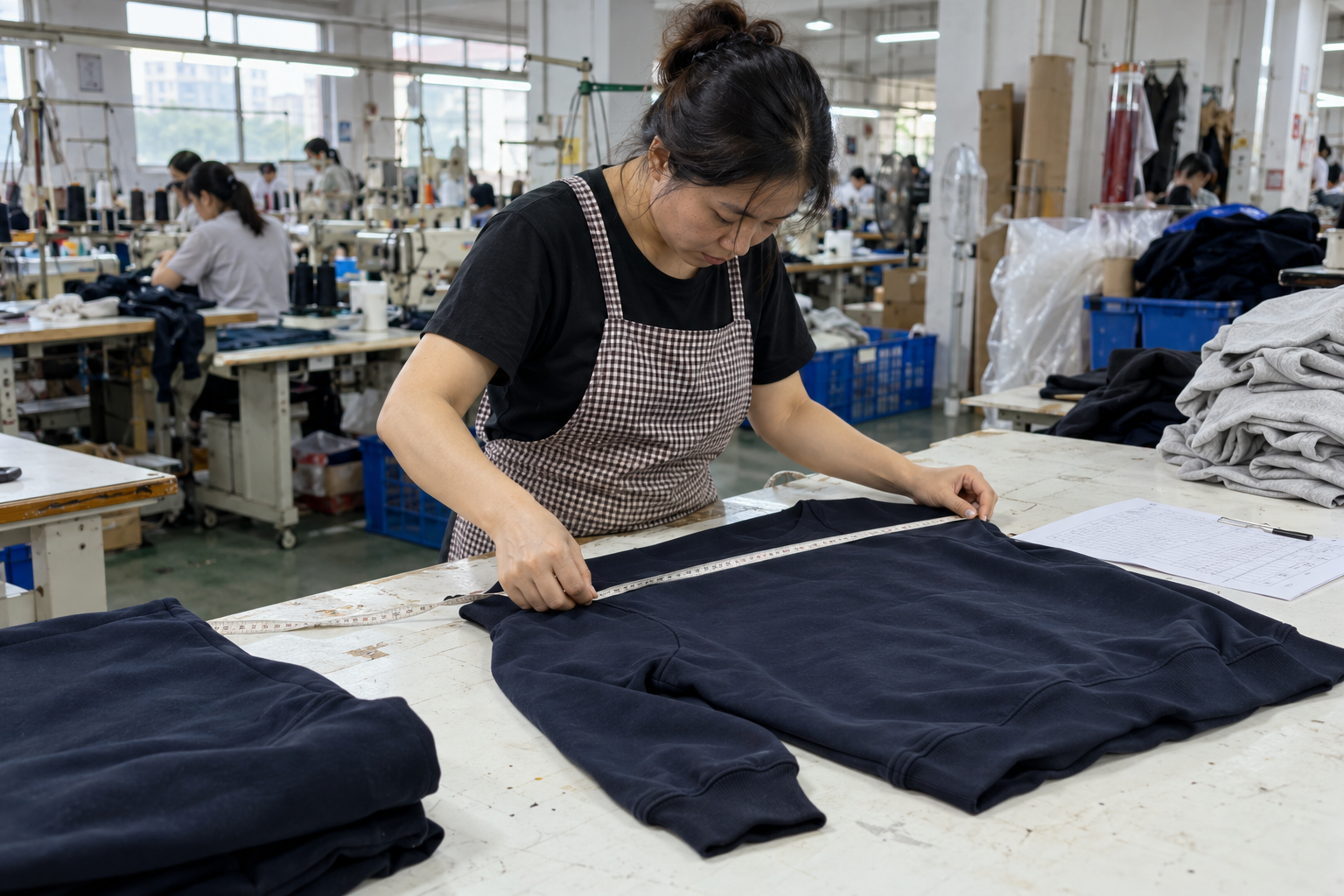
Whether you are developing activewear, sportswear, or teamwear, use the seven checks below to make your next production order easier to manage.
Why quality control should start before bulk production
Many quality problems begin with assumptions: a measurement is unclear, a fabric reference is incomplete, or a print color has not been approved. Put decisions in writing before bulk production begins. Share a tech pack where possible, confirm the approved sample, and agree how changes will be documented. This gives your China clothing factory a clear reference and makes later inspections more meaningful.
7 quality checks at a China clothing factory
1. Confirm product specifications with your China clothing factory
Check that the latest tech pack identifies the garment construction, measurement points, tolerances, stitching details, labels, artwork, and packaging. Make sure everyone is working from the same revision. If a specification is missing or ambiguous, resolve it before production rather than relying on an informal assumption.
2. Approve a sample before bulk production
Review the pre-production sample for fit, fabric feel, construction, color, trims, and overall appearance. Record requested corrections and confirm the final approved version in writing. Keep a reference sample or clear approval record so that production can be compared with what you actually signed off.
3. Check fabric, trims, and color references
Confirm the fabric composition, weight, hand feel, stretch or recovery requirements, and color standard that matter to your design. Check that zippers, drawcords, elastic, labels, and other trims match the approved choices. For repeat or multi-color orders, document the agreed reference instead of relying on a screen image alone.
4. Review cutting accuracy and size consistency
Before assembly, verify that panels are cut in the correct direction and that key pieces correspond to the size and pattern requirements. During production, measure garments at the agreed points and compare results with the approved size chart and tolerances. A consistent measurement method helps identify variation early.
5. Inspect sewing and garment construction
Look at seam placement, stitch consistency, seam strength, hems, symmetry, and areas that experience extra stress. The details will vary by garment: activewear may need particular attention to stretch seams and recovery, while a team jacket may require checks around closures and pocket construction. Use product-specific criteria rather than a generic checklist alone.
6. Verify printing, embroidery, labels, and finishing
Compare logos and artwork with the approved file and sample. Check placement, scale, color, readability, and finish, as well as care labels and size labels. Review the garment for loose threads, stains, snags, or other visible issues before it is folded and packed.
7. Final inspection before shipment from a China clothing factory
Agree in advance what the final inspection will cover, how samples will be selected, and what happens if defects are found. The review can include measurements, workmanship, appearance, labeling, quantity, and packing. For larger orders, buyers may use a defined sampling plan such as AQL; discuss the standard and acceptance criteria with your supplier or independent inspector before inspection. For broader context, the ISO overview of quality management explains how documented processes support consistency.
Questions to ask a China clothing factory
- Which approved documents and sample will production follow?
- How are changes to materials, measurements, or artwork confirmed?
- At what stages can checks take place, and what information will be shared?
- What inspection criteria and defect categories will both sides use?
- How are rejected pieces corrected, replaced, or separated before packing?
Clear answers help you understand the process and set expectations. A capable clothing manufacturer in China should be able to discuss product requirements, sampling, inspection timing, and how issues are communicated without promising that every production run will be defect-free.
How to reduce risk with a China clothing factory
Start with a complete product brief: reference images, materials, measurements, size range, construction details, artwork, target quantity, and delivery expectations. Approve the sample carefully, keep feedback specific, and avoid introducing unconfirmed changes after production starts. For a first order, consider agreeing on an inspection plan before committing to shipment, especially if the product has complex construction or detailed decoration.
Quality control works best as a shared process, not a last-minute test. When your team and supplier use the same approved references and clear acceptance criteria, it becomes easier to spot issues, discuss corrections, and make informed decisions.
Frequently asked questions
When should I inspect a clothing order?
Plan checks around the product and order risk. Many buyers review the sample before bulk production, monitor selected points during production, and arrange a final inspection before shipment. The exact timing should be agreed with the supplier.
What is an AQL inspection?
AQL is a sampling approach used in quality inspection. It does not mean every item is checked, and it does not guarantee zero defects. Agree on the applicable standard, sample size, defect definitions, and acceptance limits before using it.
What should I send a factory to request a quote?
Provide the product type, reference images or tech pack, fabric and trim preferences, size range, artwork, estimated quantity, and destination or delivery timeline. If some details are undecided, identify them as open questions so the quote can state its assumptions.
Discuss your custom apparel project
Looking for a manufacturing partner for custom activewear, sportswear, or teamwear? Explore our product capabilities or contact UniLink Apparel with your design, quantity, and timeline. We can discuss the information needed to review your project and prepare the next steps.